The Geology of Brand
By Kathy (Grunditz) Binkley
Creativity is the fire that powers innovation, culture, and professional development. Gather ‘round the campfire and light a torch of your own.
As myth would have it, the original creative act was a theft.
Prometheus stole fire from the gods and gave it to humankind, catalyzing civilization, and for his transgressions was chained to a rock for eternity. We’ve encoded the cultural memory of this link between creativity and suffering in the archetype of the tortured artist: creative achievement is reserved for the chosen few and comes at great personal cost.
To the contrary, creativity is accessible to pretty much everyone, and can be a transformative source of problem-solving, team-building, and professional fulfillment.
To generalize: businesses prize innovation but distrust creativity. Innovation is respectable, desirable. Creativity’s messier and unpredictable, and unpredictability means risk. But the two are intrinsically linked. Creativity imagines new ideas; innovation structures them into usable form.
Setting aside the matter of whether LLMs can be creative, human taste and judgment will be more essential than ever for imaginative work: generating insights, assigning meaning, and creating clarity. Creativity is a muscle, a habit, a perspective you can cultivate. Here’s how.
A “campfire perspective” invites people from different disciplines to collaborate, fostering openness and exchange that leads to richer, more performant ideas and solutions. Psychological safety is oxygen for creative fire, and leadership sets the example by demonstrating a set of behaviors:
Relax into the problem
Curiosity over certainty
Questions over answers
To highlight that last one: when clearing the campsite and gathering kindling, teams can continually ask themselves:
What if… the team, say, deviated from the brand guidelines for just one round of creative ideation?
How might… this idea be pushed to the sharpest and most emotional expression of itself?
What would it take… to surprise the client and raise the ceiling on quality?
Teams can cycle through what if, how might, and what would it take several times in the divergent thinking phase, encouraging people to pitch ideas. The goal is volume. As Napoleon is to have said, “Quantity has a quality all its own.” In this phase, the old cliché “no bad idea in a brainstorm” proves useful. Because it turns out this cliché is true, and “no” is a fire extinguisher for creativity. Judging too harshly or too early can foreclose on ideas that might’ve been brilliant if they’d had the time to ripen longer. Oftentimes, an idea that’s not working leads you to an idea that does. Sometimes the “bad idea” hopscotches the team to the brilliant one.
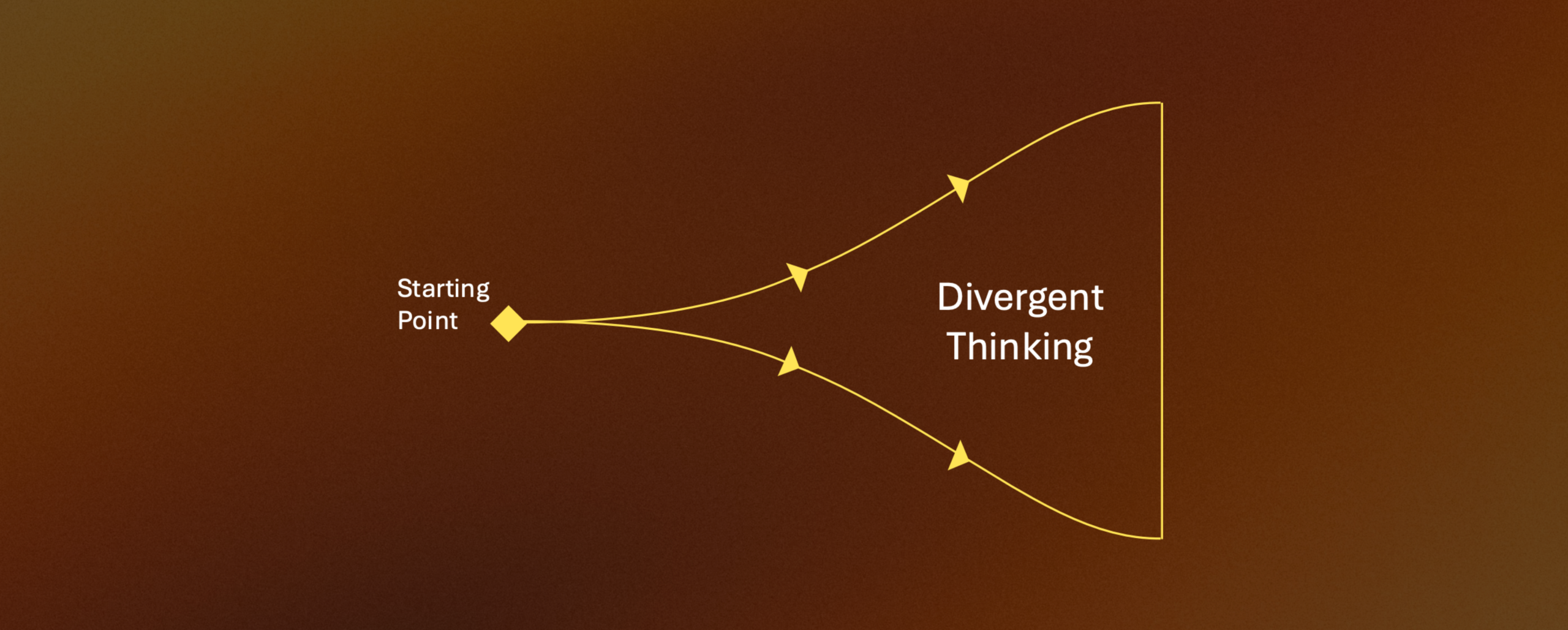
Once ideas have been explored as thoroughly as time and good sense permit, they can be winnowed down to find solutions. Now comes the other half of the design-thinking double-diamond, the convergent-thinking phase.
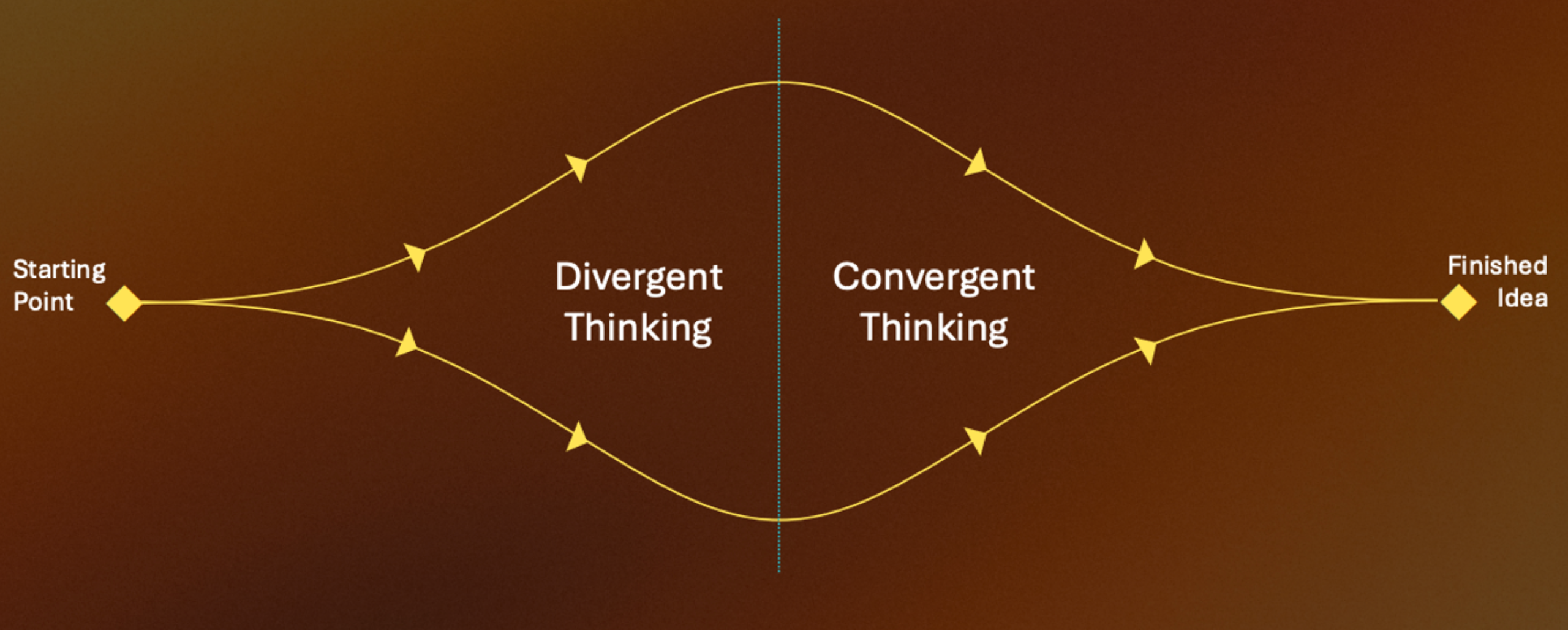
This is where the fire is channeled, again with a set of creative questions designed to help teams exercise their best judgment:
“What would need to be true for this to work?” This one comes from Richard Rumelt’s excellent book Good Strategy, Bad Strategy, and helps burn away analysis paralysis.
“What if the opposite were true?” This question helps retain that early curiosity late into a project and is especially good for taking creative ideas and pushing them to the corners to find their truest and best expression.
“What relationship exists between these ideas?” This question juxtaposes ideas to help surface hidden links or tensions between seemingly unrelated concepts, which can lead to insights that reveal solutions.
These are just some of the techniques that can help distill thinking. Ideally, they reveal multiple ways to be right.
This is a reverse-Promethean moment.
The gods of Tech have concentrated the collective cultural fire of human civilization into a controlled nuclear reaction called AI, and this morning’s headlines are split on the likely outcome: it’s the answer to the world’s problems; it’s an existential threat. Navigating this moment will require collective wisdom, creativity, and humanity.
But here’s the good news about fire: as the folk saying goes, one fire can light a thousand torches. So, take some. See how it might imbue your culture with a sense of communal connection, resourcefulness, and personal agency.
Let creativity light the way; with any luck, everyone will leave the campsite better than they found it.
The ideas shared here originate from Kevin Leahy’s Assembly 2026 presentation. To hear the complete conversation, watch the session, linked below.
Photo Credit: Geronimo Giqueaux | Unsplash
As Senior Director of Content and Brand Strategy, Kevin helps brands communicate with authenticity, clarity and distinction. He brings an interdisciplinary perspective to content, having served previously as Strategy Director and Creative Director at other agencies. From naming and taglines to strategic narratives and long-form content, his work includes cross-platform engagements for some of the world’s most successful brands.