ESPN's Migration Playbook: The Move to Figma with One North
By Matt Rogers
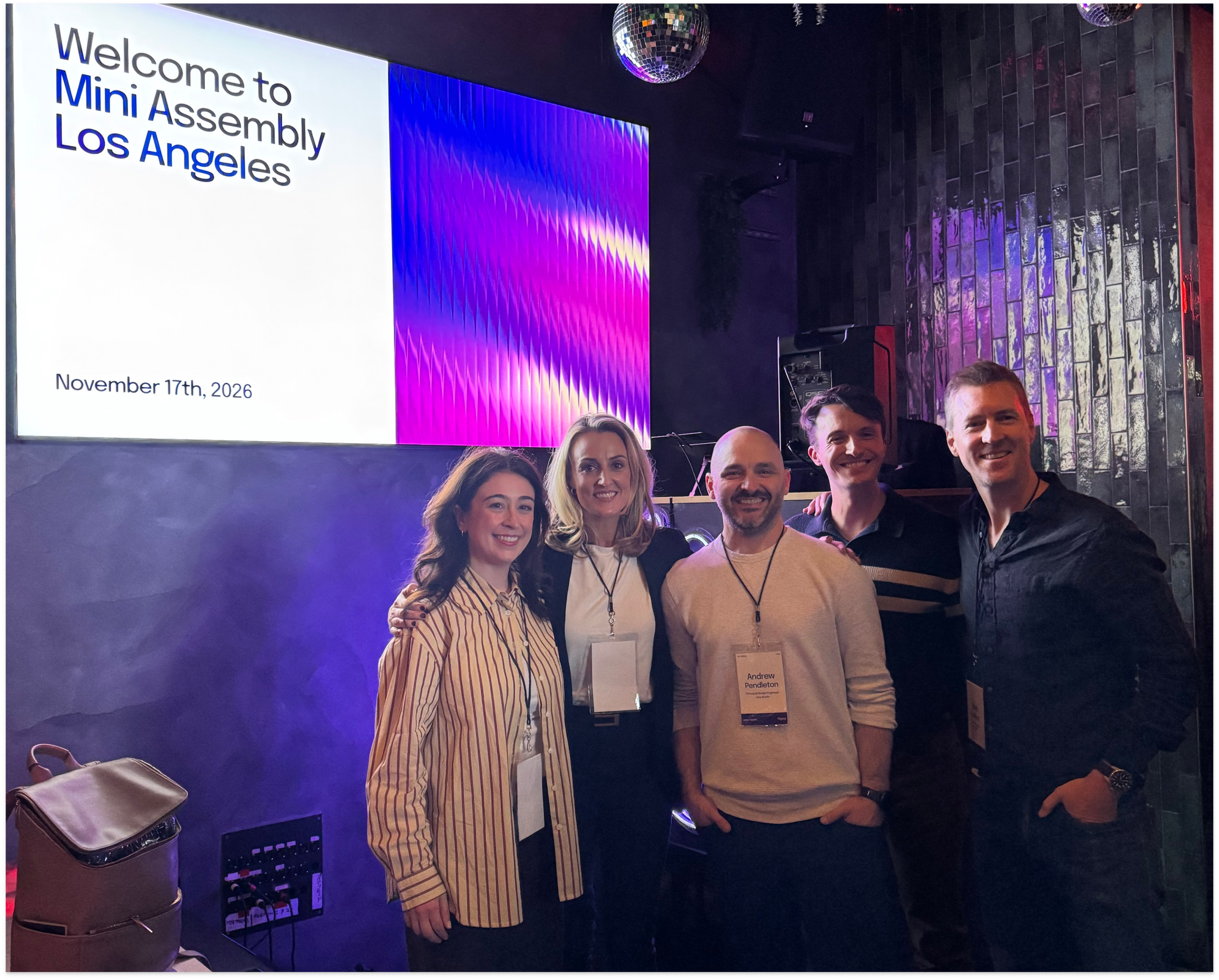
At our Los Angeles Mini Assembly, leaders from One North and Figma explored what it takes to create better digital experiences in an AI-enabled world, from stronger design systems and new standards for quality to connected creative workflows built for scale.
What does the future of digital experiences actually look like?
It’s a question with no shortage of answers, but the conversation moved beyond what’s newly possible to a more important question: What will it take to turn these new capabilities into better experiences?
The next era of digital experience will depend on the systems, standards, and human judgment behind what we create. From AI-ready design systems to new expectations for quality and accountability, connected creative ecosystems, and scalable workflows, our speakers explored what organizations need to build now to be ready for what’s next.
Here are four ideas we’re taking with us.
Jessica DeJong, Managing Director of Design at One North, opened the evening with two questions we’re hearing increasingly often from clients: How do we scale quality design output? And how do we integrate AI into our workflows? The challenge isn’t simply producing more. It’s producing more without losing the brand, craft, and judgment that make an experience valuable in the first place.
That makes design systems more important, not less.
As Andrew Pendleton, Principal Design Engineer at One North, explored in his talk, organizations can’t jump straight from adopting AI tools to AI-native creation. The foundation still matters. One North’s Design System Maturity Spectrum looks across design, code, and enablement, recognizing that organizations often mature unevenly across those areas. AI capabilities evolve alongside that maturity, from generic outputs that require significant manual intervention to systems where agents can increasingly build and maintain experiences within established rules.
It also draws an important distinction between being AI-ready and AI-native. AI-ready systems structure documentation, decisions, designs, and code so AI can understand and use them. AI-native systems go further, enabling AI to take on more of the generation while people monitor, govern, and maintain the standards behind the work.
The takeaway: AI doesn’t eliminate the foundational work of building a mature design system. It makes that investment more valuable. The more structured, connected, and governed your foundation is, the more effectively AI can build upon it.
Matt Walker, Staff Researcher at Figma, brought data to a tension many teams are already feeling.
Figma’s research across 1,500 product builders found strong enthusiasm for AI: 81 percent reported an overall positive reaction to its impact, roughly three-quarters said they’re more productive or efficient, and 72 percent reported their teams moving faster from idea to finished product. Roles are also becoming more fluid, with 66 percent saying people on their teams regularly step into work beyond the roles they were hired to perform.
But speed has introduced a new problem: more output doesn’t automatically mean better output.
More than half of builders reported encountering significant amounts of low-effort or low-quality work from others, while 52 percent said fixing low-quality AI output is among the most time-consuming parts of their jobs. Nearly six in ten also said it has become harder to know who owns what as responsibilities blur.
Matt described the progression from an age of abundance, where AI gave people new creative superpowers, through today’s age of adjustment, and toward an age of accountability. His provocation for that next phase centered on three principles: show it, state it, and sign it. Make the thinking behind the work visible. Communicate its context and level of polish. And, ultimately, take ownership of its quality, regardless of whether AI helped create it.
The takeaway: The future of digital work won’t reward output for output’s sake. As AI lowers the barrier to making things, judgment, transparency, craft, and accountability become even stronger differentiators.
Matt Rogers, Product Design Manager, brought the conversation from principles into practice through One North’s work with ESPN.
What initially appeared to be a Figma migration quickly revealed itself as a much larger ecosystem challenge. ESPN’s insert graphics spanned eight insert types, 141 distinct layouts, more than 50 sports, and over 1,550 teams, with source files living largely in Photoshop on individual designers’ machines. Moving that work wasn’t simply a matter of rebuilding components in a new tool. It required understanding and reconnecting the processes, technologies, content, and teams surrounding the work.
The lesson extends well beyond design-system migrations.
Technology is changing, but so are the relationships between teams, processes, and tools. Organizations get more value from a design system when they treat it not as an isolated library of components, but as part of a broader operating ecosystem.
The takeaway: Designing for scale requires looking beyond the artifact. The future belongs to connected ecosystems where design, technology, and content teams can evolve together.
The evening closed with Ashley McGetrick, Designer Advocate at Figma, demonstrating Figma Weave and showing what connected, node-based creative workflows can make possible.
Rather than treating generative AI as a one-off prompt-and-output interaction, Weave allows teams to build reusable workflows where the output of one step becomes the input for another. Those workflows can combine manual edits, AI models, prompts, and Figma assets, while keeping individual decisions editable rather than baking them permanently into a finished asset.
The examples ranged from cascading a design change across a set of promotional assets to giving collaborators simplified tools for updating content, generating localized variations, and applying shared brand guidelines at scale. Because those workflows can remain linked to Figma, changes upstream can flow through connected downstream assets.
But perhaps the most important point wasn’t about generation at all. As Ashley noted, not everything needs to be generated. Automation can take repetitive manual tasks off creative teams’ plates so they can reinvest that time in stronger ideas, craft, and other higher-value work.
The takeaway: The promise of AI isn’t removing creatives from the process. It’s giving them new ways to encode their thinking into reusable systems, automate repetitive work, and devote more energy to the decisions that actually require their expertise.
If there was one idea connecting every talk, it was this: the future isn’t just about what AI can create. It’s about what organizations build around it.
The teams best positioned for what’s next will be the ones that:
AI may be changing how experiences get made, but the fundamentals of great experience haven’t disappeared. If anything, they’re becoming more visible: clear systems, intentional decisions, connected teams, and people willing to take ownership of the quality of what they put into the world.
That feels like a future worth designing for.
Special thanks to Matt Walker, Ashley McGetrick, Jessica DeJong, Andrew Pendleton, and Matt Rogers for sharing their perspectives, experiences, and insights.
Interested in what these shifts could mean for your organization’s design systems, creative workflows, or AI strategy? Connect with One North to start the conversation.
Photo Credit: Toa Heftiba | Unsplash
As Marketing Manager, Andrianna helps drive the creation and execution of impactful content across platforms, showcasing One North’s expertise and thought leadership. Passionate about crafting compelling narratives, she focuses on strengthening industry leadership and inspiring meaningful client connections.