Stoking the Creative Fire
By Kevin Leahy
Storytelling is having a moment.
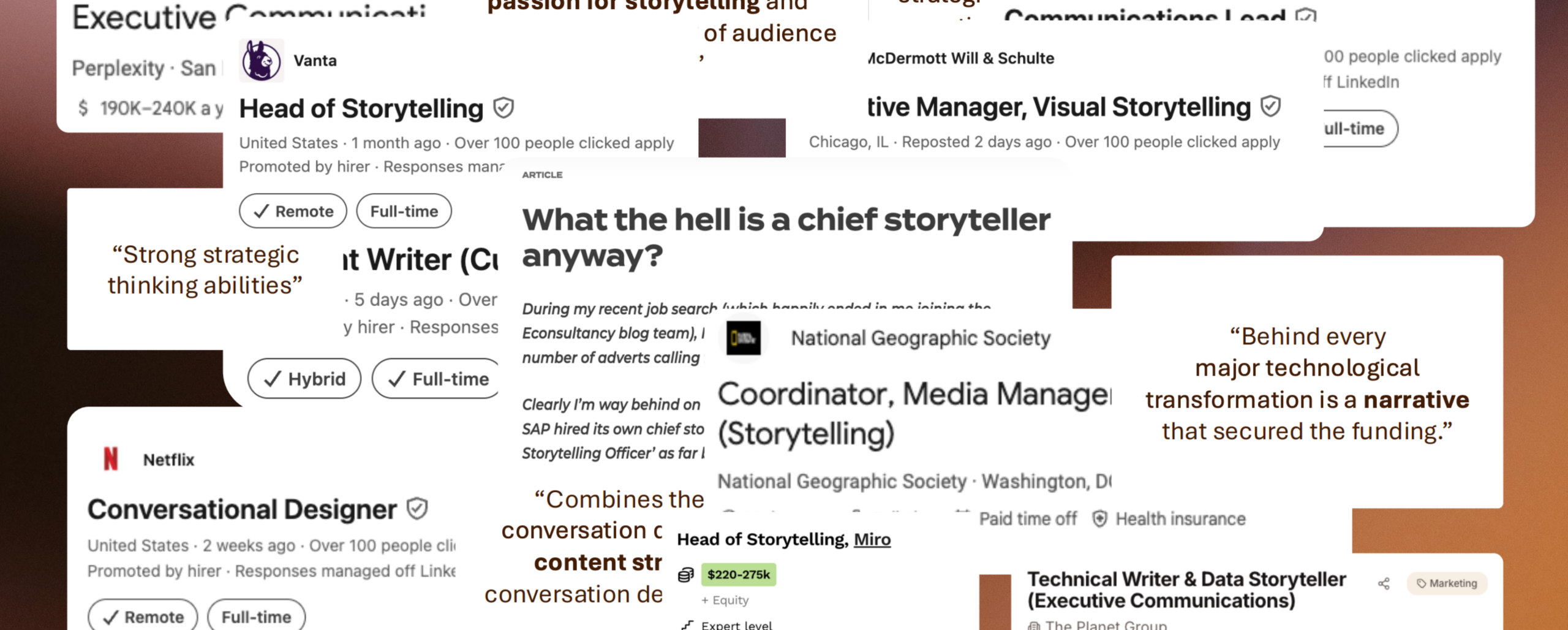
Open LinkedIn, browse job postings, or spend a few minutes listening to business leaders discuss the future of work, and a common thread quickly emerges: the ability to communicate well has become one of the most valuable skills in the modern workplace. Organizations are actively searching for storytellers, strategists, and communicators who can connect ideas with audiences in meaningful ways.
At the same time, communications have never been easier to produce.
Generative AI can draft emails, write articles, create presentations, and summarize information in seconds. The barriers to content creation have fallen dramatically, making it possible for anyone to generate mounds of content at pace.
This creates an interesting paradox. Demand for strong communication and storytelling continues to rise at the exact moment content creation has become increasingly automated.
The question isn’t whether we can create content faster. It’s whether we’re still thinking deeply enough about what we’re creating and why.
AI is remarkably good at recognizing patterns, assembling information, and generating outputs that look polished on the surface.
What it cannot do is replace judgment.
Technology can help improve efficiency, but it cannot supply a point of view. It cannot tell someone when a concept is fundamentally flawed, when the audience has been misunderstood, or when the entire approach misses the mark.
As journalist Ezra Klein observed in a discussion about writing, a generative model will rarely tell you that you’re doing the wrong thing altogether. It works with the assumptions you give it. It doesn’t have discernment or judgement or taste.
That means AI can perfectly execute a terrible idea just as easily as a strong one.
In conversations about AI, “taste” has become an increasingly important concept.
As AI systems continue to become more capable, many industry leaders argue that what will remain scarce is not the ability to generate content but the ability to recognize what good content looks like.
That’s because taste isn’t luck or instinct. It’s accumulated experience.
The gut feeling that tells an experienced strategist which message will resonate with an audience isn’t guesswork. It’s the result of hundreds of observations, conversations, successes, failures, revisions, and lessons compressed into intuition.
Taste is cultivated through collaboration, constructive feedback, and experimentation. It grows when teams debate ideas, question assumptions, and learn from outcomes (the good and bad ones).
And more often than not, it begins with a simple question: Why?
Before determining what to say or how to say it, effective communicators start with asking why.
Why are we creating this? Why does it matter? Why should the audience care?
These questions sit beneath every successful piece of communication. Their answers shape strategy before execution, clarifying intent before tactics.
Even Google’s own guidance for creating helpful content emphasizes the importance of purpose. The strongest content serves a real audience need rather than producing content simply for the sake of publishing.
When communicators skip the why, they often end up creating what could be called “fluff content”—content that fills space without delivering value.
But when the why is clear, everything else flows naturally. The audience becomes more defined. Objectives get sharper. Desired actions become more obvious. The message gains direction.
The why is the invisible force that drives your communication forward.
AI is not taking away our taste. But we do voluntarily hand it over, draft by draft, without realizing what we’ve lost in the process.
Before delegating a communication task to any person or tool, pause to ask yourself three questions:
Have I answered why?
This question brings a wealth of insight. It forces us to understand the audience, recall our own objectives, and recognize the actions we’d like to prompt in the audience.
Am I robbing myself of experience opportunity?
Not every step needs to be automated. Don’t hinder your long-term development of taste. Many seemingly dull activities are key to building valuable judgment.
Will this tool execute on my judgement and taste?
Rather than replacing it, the most effective use of AI amplifies human judgment.
As AI makes content creation faster, cheaper, and more accessible, the true differentiator won’t be who can generate the most content.
Technology can accelerate execution. It can improve efficiency. It can help refine ideas. But it cannot tell us what matters.
That responsibility still belongs to us.
The most valuable thing we bring to communication isn’t a prompt. It’s the judgment developed through experience, curiosity, and the willingness to ask why before deciding what comes next.
The perspectives shared here originate from Analisa Goldblatt’s Assembly 2026 presentation. To hear the complete conversation, watch the session, linked below.
Photo Credit: Steve Johnson | Unsplash
Analisa Goldblatt is a Lead Content Strategist at One North with a background in content management, platform migrations, and marketing. She enjoys collaborating with clients to help make sense of their content and integrate tailored strategies to improve its production, management, and the end-user experience.