How to Think Like a Motion Designer
By Katherine Wren
There’s a pattern I’ve seen play out over the last 25+ years in technology. We build systems to create order. And then we spend the next decade trying to restore freedom within them.
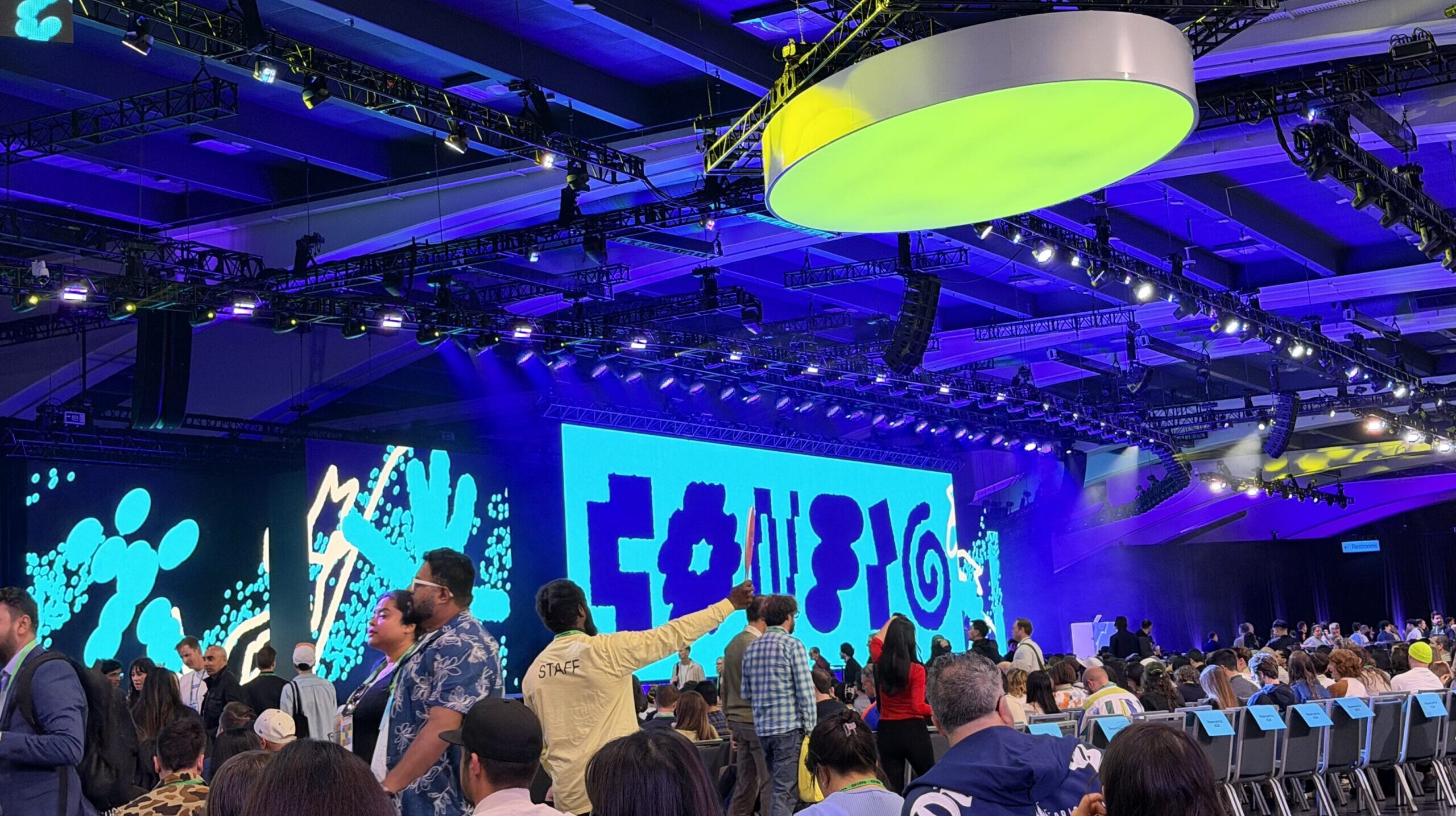
At Figma’s Config 2026, it felt like we’ve hit that turning point again — not moving past systems but evolving them into something more powerful. Something that gives people more agency.
“Agency” was a word Dylan Field, CEO of Figma, sprinkled throughout his opening keynote presentation. At its simplest, it is the ability to act. To move an idea forward without waiting — to create, adapt, and execute with a level of independence that hasn’t always been possible inside highly structured environments.
For most of my career, the focus was on building those structures. Content management systems, design systems, marketing automation; they brought much-needed consistency and scale. They reduced duplication, enforced standards, and helped organizations operate more efficiently.
But even the best systems can create friction and slow down the creative process. What stood out at Config wasn’t just new features — it was how clearly Figma is pushing past that tension. And in many ways, this has always been Figma’s plan.
From the beginning, Figma was built as a multiplayer platform with the assumption that creation would become more collaborative, more fluid, and less constrained by discipline. This year felt like the continuation of that vision and a welcome evolution for multidisciplinary partners like One North.
The canvas is no longer just a design surface. It’s becoming a shared environment where code, motion, AI, and custom tools all live together — where more of the work happens in one place, and more people can participate in it meaningfully.
In fact, if you read the Config 2026 notes published by Figma, they write:
“For years, the design industry has talked about “design versus code,” and tools (including Figma!) have forced a choice. But this is a false debate. Design is a process. Code is material, just like images, vectors and design layers. For a long time, code has lived in single-player environments built for linear thinking. Stated differently: The material was separated from the process. We believe code should be treated like any other design material. So, we are introducing code layers in Figma.”
That’s where agency shows up. Not as independence from systems, but independence through them.
The system is still there — brand standards, design tokens, content models — existing below the surface. It now becomes context rather than constraint, infrastructure rather than process.
When that happens, something shifts. You no longer must choose between speed and standards, or creativity and consistency. The system powers the work instead of slowing it down.
As someone who isn’t a designer or a developer, but has spent a career working across both, that’s the part that resonates most. For years, work has moved in sequence: design, then build, then market. Each step dependent on the next.
But when the tools collapse those gaps, more people can move ideas forward without waiting. Not because they can do everything, but because they’re no longer blocked from doing something. That’s agency.
For marketing teams, this changes more than just how things are designed. It changes how work gets done. More people can create more content in more formats. Brand systems become more dynamic. Teams become more fluid, with fewer rigid handoffs and more shared ownership.
This isn’t the end of systems — it’s their evolution. From rigid to flexible. From centralized to distributed. From process to agency. And, ultimately, something more human.
Discover the Config 2026 announcements that are shaping the next generation of digital product creation:
Photo Credit: Susan Wilkinson | Unsplash
Jen Frost is Managing Director of Marketing at One North. She works closely with the Digital Strategy, Experience Design and Technology teams to develop and enhance One North client communication and exterior messaging strategy. In addition, she provides general marketing direction for One North and promotes internal culture.